Are You a Teacher's Pet? Why Virtual School Might Be the Fairer Classroom
Are You a Teacher's Pet? Why Virtual School Might Be the Fairer Classroom We've all seen it. That one student who always seems to get the benefit of the doubt. The one whose late homework is quietly excused, whose "close enough" answer earns full marks, whose hand is always the f
Are You a Teacher's Pet? Why Virtual School Might Be the Fairer Classroom
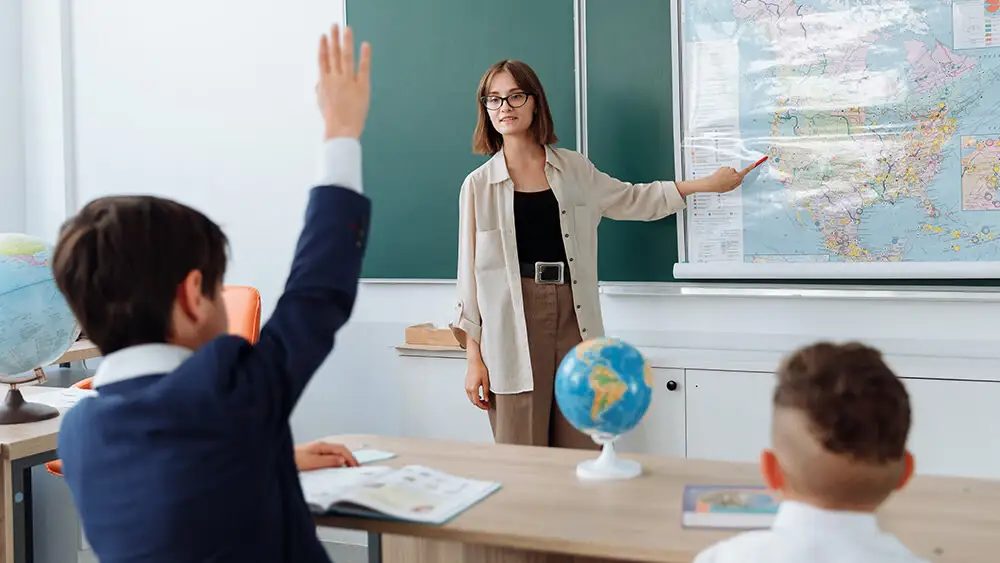
We've all seen it. That one student who always seems to get the benefit of the doubt. The one whose late homework is quietly excused, whose "close enough" answer earns full marks, whose hand is always the first one called on. Whether we admit it or not, most of us have wondered at some point: is the teacher playing favorites?
Favoritism in classrooms is a topic students whisper about in hallways and parents debate at dinner tables — but it's rarely discussed openly. And the more you look at it, the more it seems like a structural problem of the traditional classroom itself — one that virtual learning is uniquely positioned to solve.
How Favoritism Takes Root in On-Site Classrooms
In a physical classroom, teachers interact with students face-to-face every single day. Over time, this constant contact naturally builds relationships — and relationships, whether teachers intend it or not, shape perception in ways that are hard to undo. Patterns students and researchers alike have pointed to include:
- Grading with a "halo effect." A student who is polite, articulate, or simply likeable in person often receives more generous grading on subjective assignments like essays or presentations — regardless of the actual quality of the work.
- More participation credit. Teachers are more likely to notice and reward the engagement of students they already view favorably, while equally strong work from quieter students goes unrecognized.
- Leniency on deadlines or mistakes. A favored student might get a second chance on a missed assignment, while another student facing the exact same situation does not.
- Unequal attention. Physical proximity, shared interests, or simple personality chemistry mean some students get more one-on-one help and encouragement than others — through no fault or merit of their own.
Most teachers care deeply about fairness, and this rarely happens with bad intentions. But that's exactly the problem: favoritism in on-site classrooms is often invisible even to the person doing it, baked into the everyday texture of face-to-face interaction. When bias is unconscious, it's nearly impossible to self-correct.
Why Virtual Classrooms Close That Gap
Virtual learning strips away many of the everyday cues that quietly fuel favoritism — body language, physical presence, hallway chats, extracurricular bonding — and replaces them with something on-site classrooms rarely offer: a level, trackable playing field.
- Standardized, rubric-based grading. Many virtual programs rely on auto-graded quizzes, structured rubrics, or even separate evaluators grading submissions blind to who wrote them — removing the subjective judgment calls that let bias creep in.
- Far less personal familiarity to distort judgment. Without daily physical interaction, teachers simply have fewer opportunities to develop the kind of personal rapport that unconsciously tips the scales in a favored student's direction.
- A transparent, reviewable record. Discussion posts, submission timestamps, and grading logs create a digital paper trail. If a grade looks inconsistent, it can actually be checked — something that's nearly impossible to prove in a traditional classroom built on in-the-moment, undocumented impressions.
- Equal visibility by design. Every student's submission looks the same on the screen — same font, same format, same interface. Nobody's assignment "stands out" because of who's turning it in.
- Reduced social hierarchy. Without shared physical space, the social dynamics that often determine who a teacher naturally gravitates toward — popularity, extracurricular overlap, in-person charisma — have far less room to operate.
Virtual education doesn't just remove opportunities for favoritism — it actively replaces them with accountability. And accountability is the antidote to the kind of quiet, unconscious bias that's so hard to challenge in a traditional classroom.
The Real Takeaway
If fairness is the goal, virtual school offers something on-site classrooms structurally cannot: a system built on documentation instead of impressions, and standards instead of chemistry. That's not to say virtual programs are automatically perfect — the quality of the rubric and the discipline of the platform still matter. But the foundation is fairer, because it's built to minimize the very dynamics that let favoritism thrive in person.
So — have you ever felt like the teacher's pet... or felt like someone else always was? It might say less about you, and more about how much room the classroom format left for bias in the first place.
(For balance: some argue live virtual classes can reintroduce visibility bias — e.g., students who keep cameras on or speak up frequently — and that tech or home-environment gaps can shape perception too. Worth keeping in mind as virtual education continues to evolve.)